Commercial Waste Removal in Pimlico

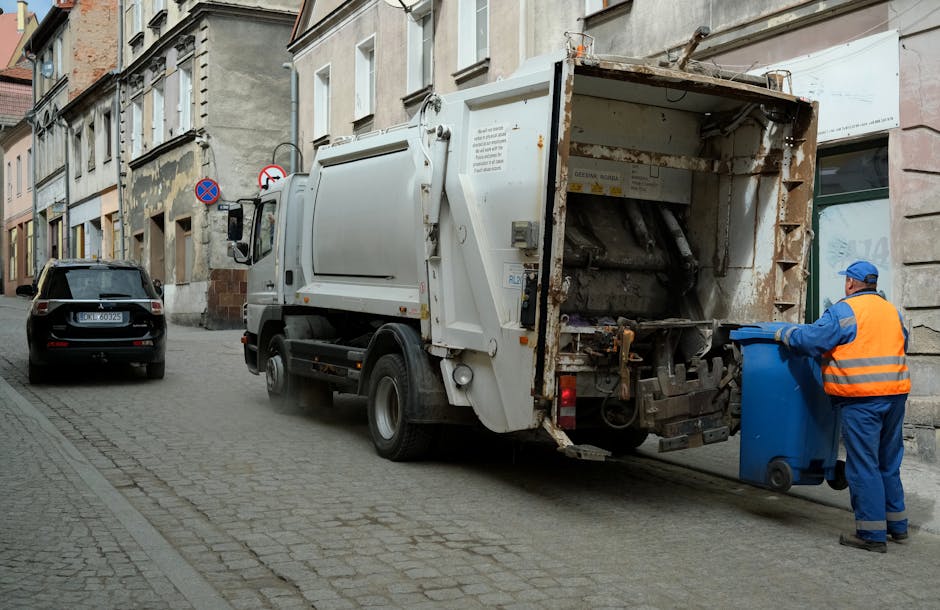
Commercial waste removal in Pimlico should be straightforward, dependable and built around the way local businesses actually operate. We provide a clear service for collecting and removing business waste from offices, shops, hospitality premises, managed buildings and shared commercial spaces, with an approach that keeps disruption controlled and the process easy to plan. The emphasis is on practical clearance, sensible segregation and responsible onward handling, so the right waste is taken away without turning the job into a long interruption.
Our commercial waste removal service covers routine clearances, one-off collections and organised removals of mixed business waste where items need separating before disposal. That can include general office rubbish, packaging, redundant furniture, fixtures, stored materials and other non-hazardous commercial items. We focus on removing waste neatly, leaving premises ready for the next stage of work, whether that means reopening a floor, resetting a workspace or clearing space for new stock or equipment.
For a quotation, it helps to know what needs removing, how the waste is stored and whether there are any access details that affect loading. If the collection is part of a move, refurbishment or regular clean-out, a short description of the materials is usually enough to start. Use the contact route that suits you best, then we can shape the collection around the scale and type of waste involved.
Business Waste Collection for Offices, Shops and Shared Premises
Business waste collection is often more effective when it is planned around the type of premises rather than treated as a generic clearance. Offices may need removal of paper waste, packaging, shelving, desks, chairs and obsolete electronics, while retail spaces can produce display items, stockroom waste, broken fittings and cardboard. Hospitality venues and multi-unit buildings often need a tidier, more coordinated approach because the waste may sit in corridors, service areas or back-of-house rooms before collection.
We handle a wide spread of commercial materials with a focus on keeping the process simple and orderly. Where the waste is mixed, it is sorted with disposal and recycling in mind, and where items are reusable or recyclable, that is considered before anything is treated as general rubbish. The aim is to make the collection practical for the premises, not to force everything into the same method. Business waste removal is a useful option when the job involves a standard trading site and the waste stream is likely to recur.
The main decisions usually concern volume, access and timing. A small back-office clearance may only need one visit, while a larger commercial empty-out may need a more structured collection plan. You do not need to over-explain the job, but the more clearly the waste type is described, the easier it is to match the collection to the property and the lifting involved. For many customers, the key question is simply whether the material can be removed in one organised visit or should be split into stages.
Office Clearances and Internal Strip-Out Waste
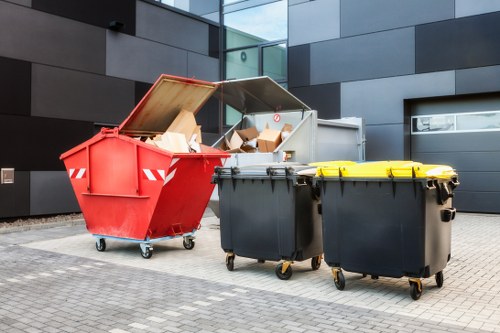
Office clearance work usually involves the removal of items that have built up through changing layouts, staff turnover or refurbishment. Typical jobs include desks, task chairs, filing units, screens, meeting furniture, archive containers and packaging from new installations. In some premises there is also a need to take away loose fittings or redundant equipment from storage rooms, server areas or reception spaces, provided the waste is suitable for removal and not subject to special handling requirements.
There are often several ways to approach an office collection, and the right one depends on the condition and arrangement of the workspace. A phased clearance can suit occupied premises, while a fuller internal strip-out may be better when a floor is being reset or handed back. We take care to keep circulation routes usable and to remove waste in a way that fits the building rather than forcing a one-size-fits-all routine. Office clearance is especially relevant when the job is centred on desks, chairs and workplace equipment rather than general household-type waste.
For these jobs, practical preparation is often enough: know which areas are included, whether lifts or stair access matter, and whether anything must remain on site. If items are grouped in advance, the collection can usually move more efficiently, but there is no need to create a perfect inventory. The important point is to distinguish between waste that is ready to go and anything that should stay in place for continuing operations or separate handling.
Furniture Removal and Disposal for Commercial Premises
Commercial furniture removal is usually about clearing bulky, awkward items that no longer fit the way a business uses the space. This may involve desks, chairs, tables, cabinets, shelving, reception units or breakout furniture. In some cases the items are worn out; in others they are simply no longer suitable after a reconfiguration, branding change or lease event. The collection is planned to take the furniture away in a manner that is workable for the site and sensible for the material.
When furniture is being removed from an active premises, the main challenge is often access rather than the items themselves. Larger pieces may need careful movement through shared entrances, narrow corridors or managed loading points, and that is where planning matters. Furniture clearance is useful for mixed pieces that need lifting and removal as part of a wider tidy-up, while furniture disposal suits situations where the main concern is the onward treatment of the items once they are collected.
Different furniture types can need different treatment, especially if materials are mixed. Metal-framed seating, timber desks and upholstered items are not handled in exactly the same way, and separating them where possible can support more efficient disposal routes. If you are arranging a collection after a refit, it is worth identifying anything that is still in use, because clear marking helps avoid removing items that are being retained for another area or future use.
Warehouse, Back-of-House and Storage Area Clearance
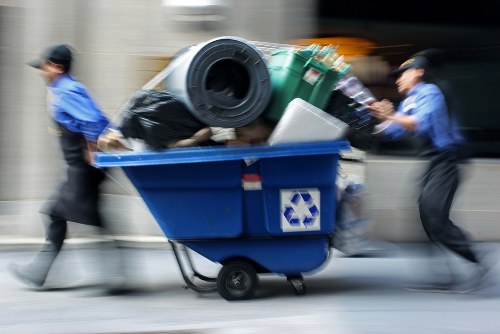
Many commercial waste jobs are less about visible customer-facing areas and more about the back-of-house spaces that fill up over time. Stockrooms, plant rooms, storage cupboards, archive spaces and internal service areas can accumulate broken packaging, redundant fittings, unused stock, old displays and general business waste. Clearing these spaces often improves movement, makes it easier to work safely and helps premises return to a more organised state without disturbing the front-of-house operation unnecessarily.
Where waste has been stored for some time, the collection may involve a mixture of lightweight and bulky materials. The job is usually more efficient when items have been grouped by type, but that is a practical aid rather than a strict requirement. We can remove waste from a range of commercial storage spaces and handle the lifting and loading so that staff are not left managing heavy or awkward items themselves. In the right circumstances, garage clearance can also be a useful reference point when the space functions more like a general storage area than a dedicated business room.
For collections from enclosed spaces, it is sensible to think about whether the route out is clear and whether anything delicate needs protecting nearby. Access questions can include door widths, stair use, loading restrictions and whether the waste sits on the ground floor or higher up. These practical details matter because they influence how the collection is planned, not because they change the type of business. A straightforward description of the layout is usually enough to start the process.
Recycling, Reuse and Responsible Waste Handling
Commercial waste removal should not stop at loading the waste into a vehicle. The way items are handled afterwards matters too, particularly where a business wants a cleaner and more orderly way to dispose of redundant materials. Different waste streams may be separated for recycling, reuse or other suitable treatment where possible, and that approach can apply to paper, cardboard, metal, timber, some furniture components and other non-hazardous materials.
Responsible handling also means knowing when a material belongs in a specialist stream rather than the general one. Items such as fridges, appliances, confidential paper waste and certain controlled materials need a more specific route and should not simply be thrown in with mixed rubbish. Recycling and sustainability is the right page to consult if the priority is the onward handling of the waste, while confidential shredding is relevant where documents need secure destruction rather than standard clearance.
Commercial customers often want a service that keeps waste movement sensible without making inflated promises. That means separating what can be reused or recycled where appropriate, dealing properly with what cannot, and being clear about any items that require a different process altogether. A good collection is not only about taking things away; it is also about making the disposal route match the material as closely as practical.
What Affects the Scope of a Commercial Waste Quote
Commercial waste quotations are usually shaped by the amount to be removed, the type of material, the access involved and whether the collection is straightforward or part of a more complex clear-out. Heavier or bulkier loads generally require more handling, while waste spread across several rooms may take longer to bring together than waste stored in one location. The quote also depends on whether the job includes furniture, office equipment, mixed rubbish or a combination of several categories.
A useful quotation request does not need to be lengthy. A short description of what is being removed, approximate volume and the layout of the premises is often enough to begin. If there are time restrictions, loading rules or items that must stay in place, those details should be included too. Two practical steps help most: first, identify the main waste types; second, note any access issues that may affect the collection. That keeps the process efficient without making it complicated.
For customers who want to compare options before arranging collection, pricing and quotes is the clearest place to start. It is also sensible to mention whether the work is a one-off event or the beginning of a repeat collection pattern, because regular waste movement and occasional clearances are not always handled in exactly the same way. The aim is to price the work around the actual task, not around assumptions.
House-Style and Flat-Style Commercial Clearances in Mixed Buildings
Not every commercial waste job takes place in a stand-alone office or shop. Some businesses operate from mixed-use buildings, upper floors or converted properties where access resembles a flat or house more than a conventional commercial unit. In those situations, the collection needs to respect shared entrances, stairs, narrow corridors and neighbours using the same building. The waste itself may still be business-related, but the route out can be more like a domestic-style clearance.
That is why it can help to think in terms of layout as well as waste type. If the premises are arranged across rooms, loft spaces, basements or multiple floors, the collection needs to account for where the items are stored and how they can be moved safely. Flat clearance can be a useful reference for upper-floor or compact premises, while house clearance is relevant where a business operates from a more conventional property format and the waste is spread across several rooms.
Mixed-use sites also benefit from a tidy sequence of work. It is easier when the items to be removed are separated from anything staying on site, and when the route through the property is reasonably clear. That does not mean the premises must be perfect before collection; it simply means the waste should be identifiable and the access route known, so the removal can be carried out without avoidable disruption.
About Pimlico
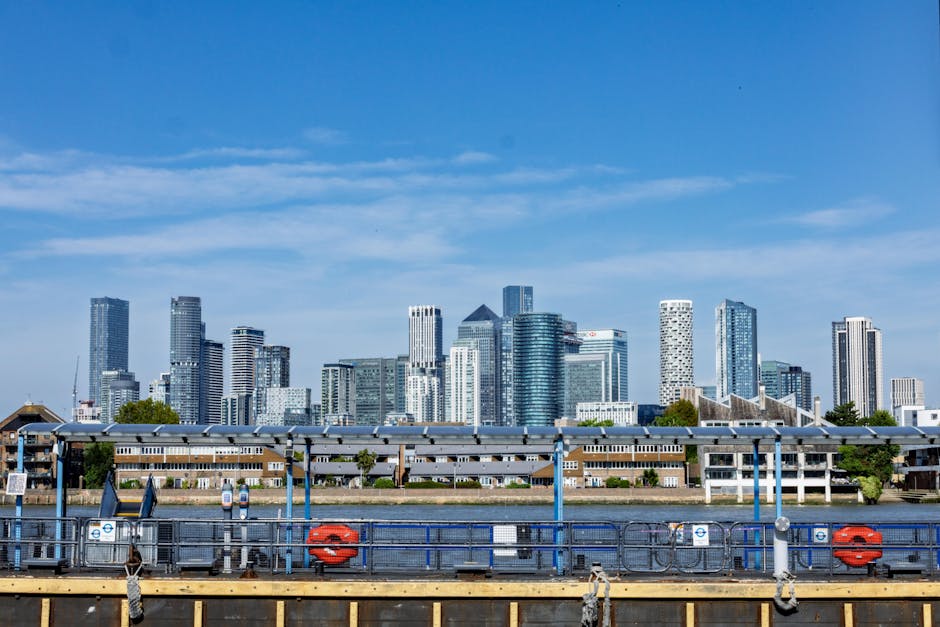
Pimlico is an inner London district in the City of Westminster, laid out in the 19th century as one of the capital’s planned residential quarters. Its street pattern is notably regular, with garden squares and terraces that reflect the fashionable building campaigns of the early Victorian period. The area is closely associated with white stucco terraces, well-proportioned streets and a quiet urban character that distinguishes it from busier neighbouring parts of central London. Much of its built form gives the district a coherent architectural identity, and this is one reason it is often recognised as a distinctive neighbourhood rather than simply a postcode area. The grid of streets sits close to the River Thames, and the district’s position near the river has long shaped its sense of place. Warwick Square and Eccleston Square are among the better-known open spaces, providing a calmer contrast to the surrounding city streets. The locality also includes a number of historic residential buildings and mansion blocks that contribute to its layered streetscape. Church architecture forms another part of the area’s character, with prominent parish buildings helping to anchor local life. Victoria station lies just to the north-east, placing the district within easy reach of major transport links while preserving its more settled residential atmosphere. Cultural associations have also formed part of Pimlico’s identity over time, with the area linked to design, publishing and the wider civic life of Westminster. The relationship between the streets, the garden squares and the river edge makes it a compact but varied part of London, where formal planning and later urban change sit alongside a strong sense of continuity.
Builders’ Waste, Heavy Items and Mixed Refurbishment Debris
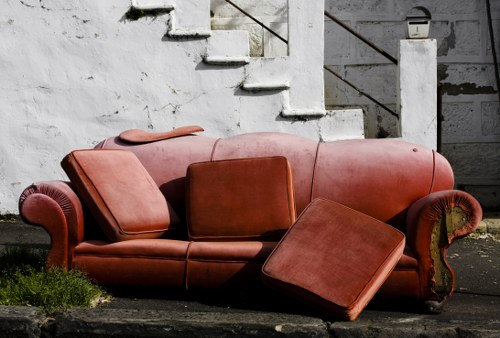
Some commercial waste collections arise from refurbishment, light strip-out or fit-out work rather than from day-to-day trading. These jobs may include broken fixtures, packaging, offcuts, old shelving, redundant panels, damaged furniture and other non-hazardous debris generated during improvement work. The emphasis is on taking away the waste that is left after the useful work is complete, so the premises can move on to the next stage without piles of leftovers getting in the way.
Where building-related waste is involved, it helps to separate what is being removed from anything that might require specialist disposal. Not every refurbishment item is handled in the same way, especially if electrical components, appliances or controlled materials are part of the mix. Builders’ waste clearance is the most suitable option when the job includes mixed debris from alterations, while fridge and appliance removal is more relevant if the waste includes bulky units that need a specific disposal route.
For customers managing a fit-out, the priority is often to keep the work area moving. That means waste collection should be timed so it does not block trades, stock handling or customer access more than necessary. If the collection follows a larger project, it is useful to say which materials are ready now and which are still in use. That small distinction helps avoid misunderstandings and makes the removal easier to organise in a commercial setting.
Useful Waste Types, Access Notes and Next Steps
When arranging commercial waste removal, a short and accurate description is usually the best starting point. Useful details include the main materials, whether anything is particularly bulky, whether the waste is concentrated in one room or spread across the building, and whether access involves stairs, lifts, parking limits or loading restrictions. If a collection is being planned around opening hours or tenant arrangements, that can be mentioned as well, because it affects how the work is scheduled rather than the type of waste itself.
Some jobs also need a clear decision about what remains on site. A collection works best when items to be removed are clearly separated from furniture, equipment or stock that should stay. The final stage is simple: confirm the waste category, note the access route and request a quote that matches the actual task. If you are ready to move ahead, send the details and ask for a quotation; if you are still comparing options, keep the waste notes handy and plan the collection when it suits the premises. Contact us for a quotation.
For larger or repeat collections, it can help to think in terms of a regular waste pattern rather than a single incident. Some businesses need a one-off office or stockroom clearance, while others may return to the same type of collection after each cycle of change, refit or restocking. Either way, the service should remain practical, clearly described and straightforward to arrange.